
Why Skaters Embrace Gender-Neutral Streetwear
Skaters pick gender-neutral streetwear for a simple reason: it fits how they move, how they shop, and how they want to show who they are.
If I had to sum up the whole topic fast, I’d say this:
- Skate style has always been function-first: loose tees, baggy hoodies, and roomy pants work well on and off the board.
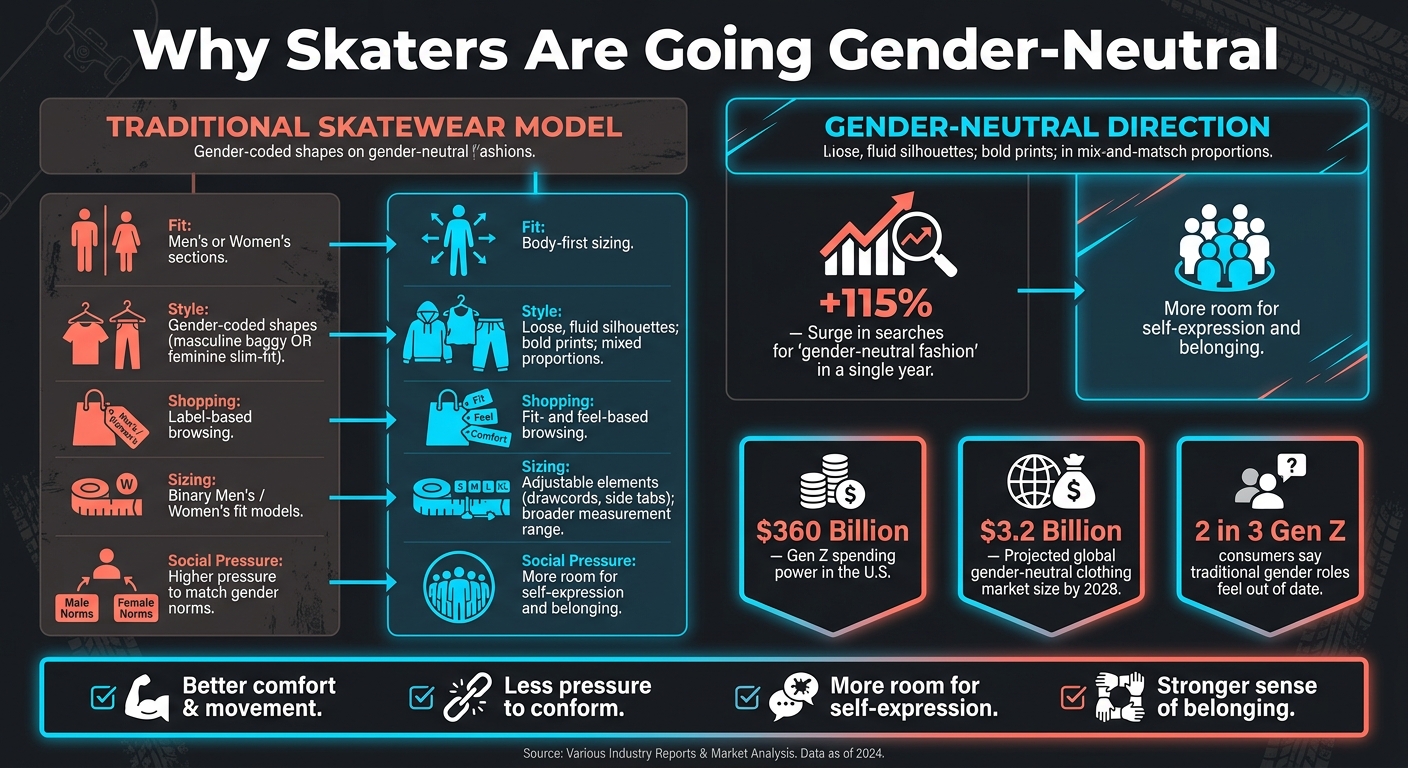
- More shoppers are moving past men’s vs. women’s labels: searches for “gender-neutral fashion” rose more than 115% in one year.
- Gen Z is driving this shift: two-thirds say old gender roles feel out of date, and this group has about $360 billion in spending power in the U.S.
- For queer and gender-diverse skaters, this can mean less pressure and more freedom to dress in a way that feels right.
- Brands are reacting with unisex sizing, relaxed cuts, stretch fabrics, and simple color palettes.
What this comes down to is pretty clear: skatewear already leaned this way. The market is just catching up.
Quick comparison:
| Area | Older skatewear model | Gender-neutral direction |
|---|---|---|
| Fit | Men’s or women’s sections | Body-first sizing |
| Style | Gender-coded shapes | Loose, fluid silhouettes |
| Shopping | Label-based | Fit- and feel-based |
| Social side | More pressure to match norms | More room for self-expression |
So when I look at why skaters choose this style, the answer isn’t hard to find: better movement, less friction when shopping, and more space to dress like yourself.
Gender-Neutral Skatewear vs. Traditional Skatewear: Key Differences & Market Stats
Why skate culture already leans toward gender-neutral style
Skateboarding has always cared more about what works than what fits a dress code. That’s why gender-neutral clothing already feels at home in skate culture. In most skate spaces, practical cuts don’t feel like a new idea. They just feel normal.
How skate style developed outside formal dress rules
Skate style came from function, not rules. It grew out of what skaters could actually move in: loose fits, hard-wearing fabrics, and easy layers. Baggy jeans, boxy tees, and oversized hoodies weren’t picked to match some polished look. They stuck because they worked. And those same choices line up closely with the oversized shapes now tied to gender-neutral fashion.
The connection is pretty simple. Skateboarding has anti-establishment roots, so it tends to push back on anything that feels forced from the outside. That includes gendered sizing systems.
How women, queer, and gender-diverse skaters changed skate aesthetics
Once that function-first style took hold, more people could make it their own. Women, queer, and gender-diverse skaters did exactly that. By wearing the same baggy pants and oversized fits once coded as men’s skate style, they pushed back on old gender expectations. Clothing became a tool, not just a uniform.
You can see that change in how skate aesthetics have shifted:
| Feature | Traditional Gendered Skatewear | Emerging Gender-Neutral Skatewear | Social Meaning |
|---|---|---|---|
| Sizing Logic | Binary "Men's" and "Women's" fit models | Body-first sizing; adjustable elements like draw-cords and side tabs | Puts comfort ahead of labels |
| Aesthetic | "Masculine" baggy or "feminine" slim-fit | Fluid silhouettes; bold prints; mixed proportions | Pushes against binary norms |
This shift also lines up with what younger shoppers care about. 34% of Gen Z consumers agree brands should be boycotted if they do not act on social and environmental issues. In skate culture, where respect and inclusion have long mattered, that view doesn’t feel out of place.
That same fit-first mindset helps explain why comfort and identity show up so strongly in the research that follows.
sbb-itb-e116ef9
What studies say about identity, comfort, and well-being
Beyond skate style, research helps explain why this shift feels so personal.
How flexible clothing options support self-expression and comfort
Studies show that clothing shapes identity, comfort, and how skaters express themselves on and off the board. For Gen Z, clothing is part of how they build and show who they are. Gender-neutral skatewear fits that mindset because it puts fit, comfort, and self-expression first. Gender-neutral sizing also cuts down on friction, so skaters can pick pieces based on how they move and feel, not which label they’re supposed to shop under.
Why gender-neutral clothing matters for LGBTQIA+ and gender-diverse skaters
For LGBTQIA+ and gender-diverse skaters, gender-neutral apparel can take away the pressure to dress for a binary that doesn’t reflect who they are. Research shows that clothing without gender barriers is liberating, allowing people to wear what resonates with their identity rather than conform to a specific gender. That kind of support can strengthen self-worth and help people feel more at home in skate spaces.
Put simply, the difference shows up in four main ways:
- Better comfort
- Less pressure to conform
- More room for self-expression
- A stronger sense of belonging
That same change in values also shows up in shopping behavior.
Youth fashion and market data behind the shift
What Gen Z data shows about shopping beyond gender labels
The numbers now line up with what skate culture has shown for years. Searches for "gender-neutral fashion" jumped by more than 115% in a single year, and the global gender-neutral clothing market is expected to hit $3.2 billion by 2028. This isn't a passing style wave. It's a clear change in how younger people shop.
For Gen Z, clothing is about self-expression, not a box marked men's or women's. That shows up in how they buy: they're more likely to pick something because it suits their style and body, not because it sits in the "correct" aisle. Skaters have done this forever. Loose, functional pieces have always mattered more than the label. Now Gen Z is pushing that same habit into the mainstream.
And you can see it far beyond skate shops. It's showing up across streetwear as a whole.
How streetwear growth supports gender-neutral skatewear
Oversized silhouettes - baggy hoodies, wide-leg pants, and oversized jackets - are leading 2026 fashion, and they work across many body types. These are fit-first cuts, not gender-first ones. They also match how skaters have long liked to dress: loose, functional, and expressive.
Brands are reacting. Retailers are adding gender-neutral sections and unisex sizing because shoppers want them. At the same time, brand loyalty is weak - only 28% of Gen Z consumers say they're loyal to a small group of brands - so labels have to earn attention through inclusivity and design. For Gen Z, values play a big part in where they spend their money.
What gender-neutral skatewear looks like in practice
Design choices that support access, movement, and self-expression
This is what those comfort and self-expression trends look like once they hit the rack.
The research points to a pretty clear set of features behind gender-neutral skatewear: straight cuts and relaxed silhouettes that work across body types. Roomier shoulders also help. So do cotton blends with a bit of stretch, which let the fabric move with you instead of sticking to the body.
Fit is only part of the story. Durability matters too, especially in skatewear. Mid-weight fabrics, neat stitching, and high-quality cotton blends help pieces keep their shape through falls, repeat washes, and day-to-day wear. Color plays a role as well. Neutral palettes - blacks, grays, whites, and earth tones - plus minimal designs or universal logos make items easier to style and easier for more people to wear.
Unisex sizing helps on the buying side too. It uses a broader measurement range, which cuts down on the need for separate men's and women's lines. Put together, these choices make skatewear simpler to wear both on and off the board.
A relevant example: Carbonated Thoughts
You can see that design approach in actual brands. Carbonated Thoughts is a U.S.-based inclusive e-commerce platform that brings these ideas into unisex apparel, skateboards, and cause-linked products. Its "Carbonated Racing" initiative plants one tree for every skateboard deck sold, and projects like "Pope of Love" use apparel and stickers to address social issues and faith.
Conclusion: Why more skaters are choosing gender-neutral streetwear
Gender-neutral skatewear gives skaters a better fit, longer wear, and more room to show personal style. That lines up with Gen Z's broader move toward individuality over traditional gender rules.
FAQs
How do I find the right fit in gender-neutral skatewear?
Start with measurements, not labels. Check the brand’s size chart and garment measurements instead of relying on “unisex” alone. That word can still cover cuts that fit body types in very different ways.
For a streetwear look, size up if you’re between sizes. An oversized fit usually gives you more comfort and easier movement. It also helps to look for inclusive sizing, durable fabrics, and reinforced stitching.
Is gender-neutral skatewear only popular with Gen Z skaters?
No. Gen Z helped push back on binary fashion norms, but gender-neutral skatewear isn't tied to one age group.
It reflects a longer shift in skate and streetwear, where staples like the hoodie became common across many backgrounds. Today, it appeals to a broad mix of people for a simple reason: it blends comfort, inclusivity, and room for personal expression.
What features matter most in gender-neutral skatewear?
The most important features are roomy fits, inclusivity, and durability. Oversized silhouettes give skaters more freedom to move while also supporting a relaxed, gender-fluid look.
Skaters also care about sturdy fabrics, reinforced stitching, and bold graphics or DIY details that help them show who they are. Comfortable, inclusive fits let people focus more on personal identity and values instead of rigid gender labels.