
Ultimate Guide to Community Skateboard Workshops
Community skateboard workshops are more than just events - they're spaces where skaters of all levels come together to learn, share, and connect. These workshops focus on skill-building, creativity, and community engagement, offering activities like skateboarding lessons, gear swaps, and DIY projects. Whether you're a beginner or an experienced skater, these gatherings promote collaboration and strengthen local skateboarding culture.
Key takeaways:
- Workshops prioritize community over competition. They encourage teamwork, mentorship, and inclusivity.
- Activities include skill-building, gear maintenance, and creative projects like customizing skateboards and grip tape art.
- Workshops address accessibility and sustainability by offering gear swaps and reusing skate equipment.
- Planning requires careful attention to location, safety, and community needs, with venues ranging from skateparks to community centers.
- Promotion relies on social media, partnerships, and word-of-mouth to attract participants and volunteers.
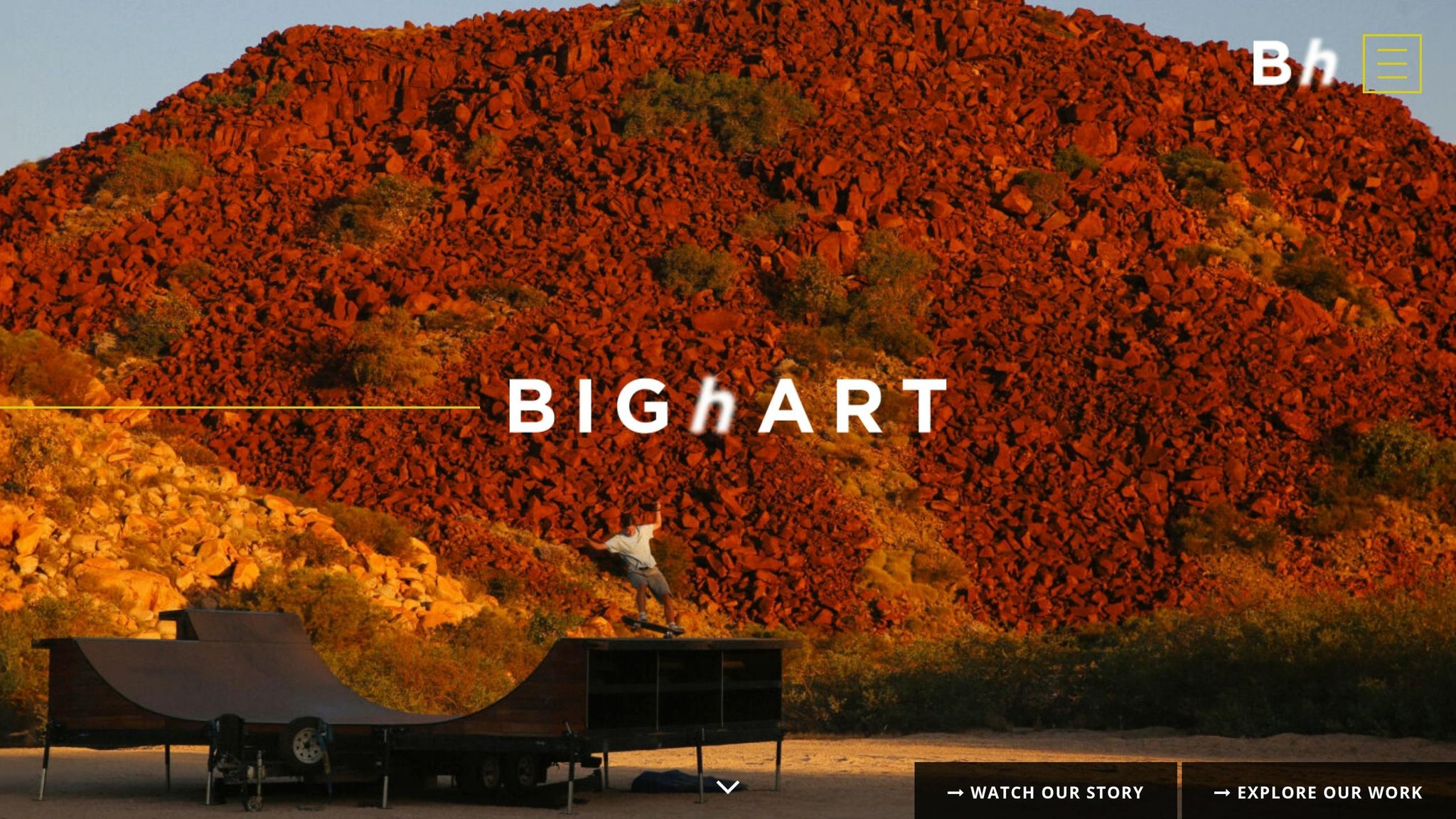
BIG hART – Skate of Mind Tour with Totem Skateboarding
sbb-itb-e116ef9
How to Plan a Skateboard Workshop
Skateboard Workshop Venue Comparison Guide
Organizing a skateboard workshop starts with understanding your audience and tailoring the experience to their needs. Whether you're catering to beginners, families, or advanced skaters, it's essential to align your equipment and instruction with what the community is looking for. A quick poll on social media or a survey of local skate groups can help you figure out what activities would resonate most. Once you have that insight, focus on finding the right venue that matches your goals.
Choosing the Right Location
Your venue choice can make or break the event. Look for a space that's easy to access by public transit, bike, or foot. The terrain should suit your audience - flat and smooth surfaces work best for beginners, while advanced skaters may appreciate more varied terrain. Make sure the area is free of major obstacles, has enough space, and includes basic amenities like restrooms. If you're hosting evening sessions, proper lighting is a must.
Also, think about how the event might affect the surrounding community. Noise levels and proximity to residential areas are important considerations. A 2009 study by the Tony Hawk Foundation (now The Skatepark Project) highlighted how public-facing skateboarding facilities can reduce criminal activity and improve safety perceptions. Hosting your workshop in a visible location can encourage community support and discourage negative activity.
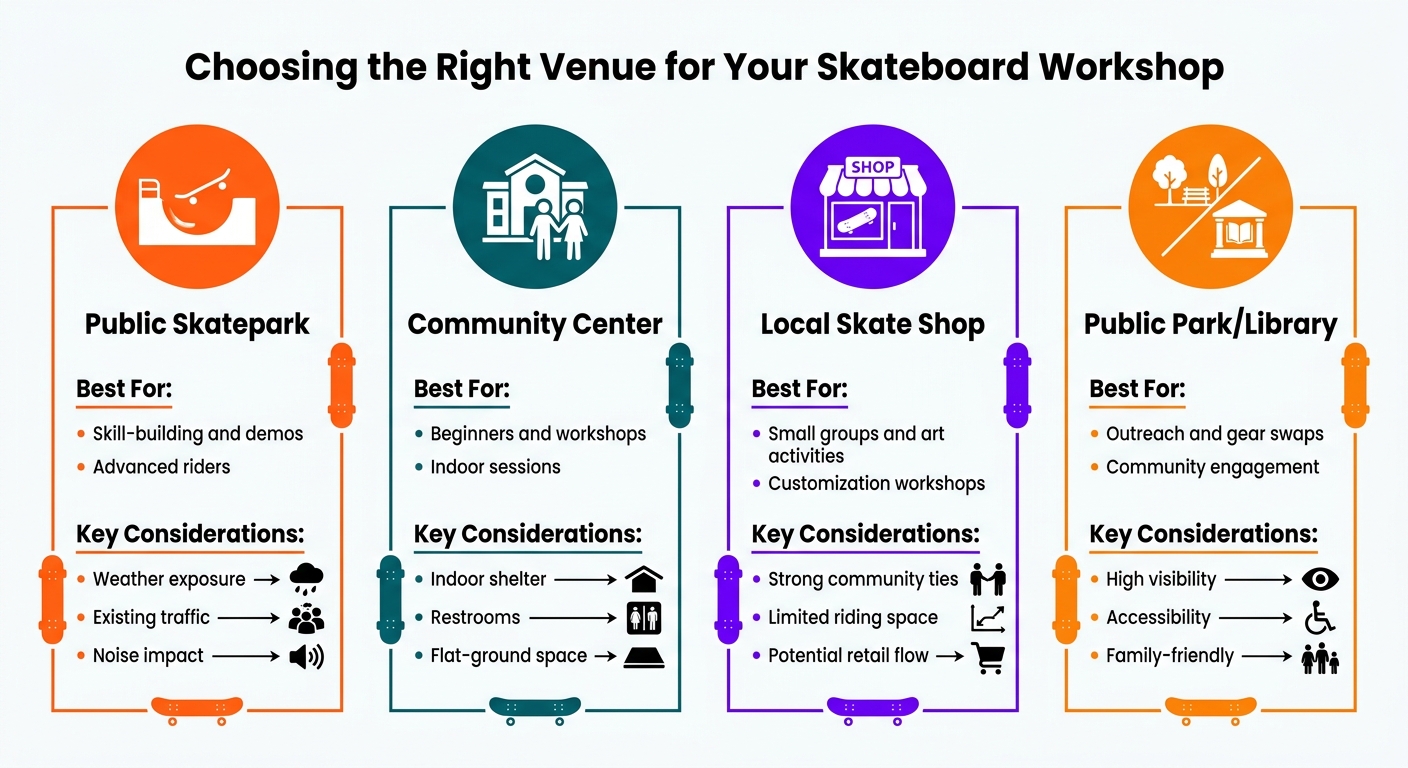
| Venue Type | Best For | Key Considerations |
|---|---|---|
| Public Skatepark | Skill-building and demos | Weather exposure, existing traffic, noise impact |
| Community Center | Beginners and workshops | Indoor shelter, restrooms, flat-ground space |
| Local Skate Shop | Small groups and art activities | Strong community ties, limited riding space |
| Public Park/Library | Outreach and gear swaps | High visibility, accessibility, family-friendly |
Finding Participants and Volunteers
Getting people to attend your workshop means using a mix of promotional strategies. Combine social media platforms like Instagram, TikTok, and Facebook with traditional methods like flyers at local skate shops and community centers. Partnering with libraries, schools, and skate shops can expand your reach and boost credibility. For example, The Urban Skate Swap Collective in Portland attracts around 150 attendees per event by consistently working with local organizations.
"Word-of-mouth remains one of the strongest drivers for a niche sports community." - skatesboard.us
Volunteers are just as important as participants. Reach out to local skate groups and community organizations, and assign roles based on each volunteer's strengths. Clearly labeling sessions - like "Introductory" or "Advanced" - helps manage expectations and ensures you attract the right mix of attendees. To generate extra buzz, consider offering incentives like early-bird pricing or eco-friendly challenges, such as a gear swap contest.
Getting Equipment and Safety Gear
Once you've secured a venue and participants, focus on gear. Safety is non-negotiable, so provide helmets and pads that meet CPSC or Snell certification standards . In the U.S., skateboarding injuries lead to about 50,000 emergency department visits annually, with head injuries accounting for a significant portion. Inexperienced skaters - especially those with less than a week's experience - make up about one-third of these injuries.
To make your workshop accessible, offer helmets and pads for participants to borrow . You could also organize a gear swap to provide affordable, pre-owned equipment while promoting sustainability. For skateboards, beginners should use shorter decks for easier handling, while wider decks offer more stability for transition skating . Softer wheels are ideal for rough surfaces, as they absorb vibrations and handle debris better than harder wheels.
Set up a repair station with tools, wax, and lube to keep equipment in good shape during the event . Budget around $57–$85 for pad sets and $73–$75 for helmets, and always inspect gear before each session . Keep in mind that helmets must be replaced after any significant impact, even if there's no visible damage, as the foam inside compresses and loses its protective ability.
"The foam inside [a helmet] compresses when it takes a hit. You might not see the damage, but it's there." - Danielle, Founder, Soulful Skate Co
Working with Local Partners
Collaborating with local skaters, artists, schools, and nonprofits can turn a simple workshop into a powerful community initiative. These partnerships bring in resources, trust, and local knowledge that are hard to achieve on your own. Plus, long-term volunteer efforts and strong alliances are crucial for securing venues and funding opportunities.
Connecting with Local Skaters and Artists
The local skateboarding community is central to your workshop's success. Start by visiting skate parks and popular spots to meet skaters face-to-face and build relationships. Skate shops can also be invaluable - they often act as community hubs, helping promote events, connect you with key skaters, and assist with logistics. Social media platforms like Instagram, TikTok, and Facebook groups are another way to discover local talent and boost your event's visibility.
Artists can bring a creative edge to your workshop. Take the Urban Skate Swap Collective in Portland, for example: they attract an average of 150 attendees per event by offering creative workshops like deck pressing and grip tape art. By rotating venues and collaborating with local businesses, they not only increase skatepark usage but also drive foot traffic to nearby stores. These artistic partnerships add a unique flair to events while strengthening ties within the community.
To keep communication professional, prepare a clear concept paper outlining your vision and next steps. Set up an official email account and mailing list to stay organized. You can also invite local pros or repair experts to host sessions on gear maintenance or trick techniques, adding extra value for attendees. These creative efforts help build a foundation of support for future collaborations, including partnerships with schools and educational programs.
Partnering with Schools and Nonprofits
Expanding your network to include schools and nonprofits can amplify the impact of your workshop. While schools might need some convincing, showcasing skateboarding's social and physical benefits can help. Include young skaters who understand the community's needs and pair them with supportive adults to boost credibility.
"A cause is much easier to get behind if supporters know exactly what they would be getting themselves into, while the communities should learn about the enormous benefits of skateboarding."
- Daniel Gluche, Founder and Coach
If you're not a registered nonprofit, consider working with an established organization as a fiscal sponsor. For instance, Exposure Skate in Encinitas, California, has partnered with groups like the Community Resource Center and Monster Skatepark in Sydney since 2012. Their work has supported women and nonbinary skaters in 25 countries and raised $300,000 for domestic violence programs.
Visual aids like concept designs or illustrations can help school boards and nonprofit leaders see the potential of your workshop. Start with small, manageable projects like building a DIY ledge or hosting a weekend skate session to prove that your community is active and engaged. These partnerships create a foundation for a sustainable and inclusive skateboarding culture, enriching every workshop along the way.
Running Workshop Activities
A workshop's success often lies in its activities. A great session strikes a balance between skill-building and creative exploration, offering participants both practical knowledge and a chance to express themselves. It’s all about creating activities that cater to everyone - from those stepping on a board for the first time to seasoned skaters fine-tuning their techniques.
Teaching Skateboarding Skills and Techniques
Start with the basics. Beginners need to focus on balance and basic pushing before moving on to tricks, so allocate time for simple drills on flat ground. Choosing the right deck width based on skill level can also make learning easier.
"Safety gear protects your learning curve. Riders who stay healthy get more time on the board, more attempts per session, and more opportunities to learn from mistakes."
- Marcus Vale, Senior Skateboarding Gear Editor
For intermediate and advanced skaters, consider organizing mini-sessions led by local pros. These could focus on more advanced techniques like kickflips, grinds, or transitions in bowls. To enhance understanding, change one variable at a time - such as switching between softer and harder wheels - so participants can feel how these adjustments impact their ride. Events like those held by the Urban Skate Swap Collective in Portland, which combine gear swaps with technical workshops, attract around 150 attendees on average. This step-by-step approach keeps the experience manageable while building deeper knowledge.
Don’t forget about gear maintenance. Teach participants how to clean bearings, adjust truck and deck widths, and fine-tune bushings. For example, softer wheels help absorb vibrations on rough surfaces, while harder wheels are better for controlled slides on smooth concrete. These sessions not only improve riding skills but also empower skaters to care for their equipment, fostering independence and confidence.
Customizing Skateboards and Creating Art
Once technical skills are covered, let participants tap into their creativity by personalizing their skateboards. These creative activities not only result in one-of-a-kind boards but also foster a sense of community as participants share their designs and ideas.
Grip tape art is a simple yet impactful way to start. Participants can experiment by layering textures or creating custom grip zones, using coarser tape for areas requiring high control and smoother tape for tricks. For deck customization, begin with prepping the surface and applying 2 to 3 thin coats of wood primer. White primer enhances bright colors, while gray works better for neutral tones.
Stencil techniques are a fun way to merge street style with artistic flair. Beginners can try single-layer stencils for bold designs, while more advanced participants can use multi-layer stencils (3 to 7 layers) to create intricate portraits or gradients. The growing interest in customization is reflected in the global skateboard market, which hit $3.56 billion in 2024, with about 35% of buyers willing to pay extra for personalized designs.
"The best pieces aren't always the most technically perfect ones."
- Stanislav Arnautov, Founder, DeckArts
For painting, provide acrylic paints for versatility and oil-based paint markers for detailed line work. Encourage participants to apply several light coats of paint from a 6- to 8-inch distance to avoid drips or warping. To protect their designs, seal the finished artwork with UV-resistant varnish or clear polyurethane (3 to 4 coats), ensuring durability against fading and scratches. These creative sessions allow participants to take home functional, personalized art, leaving them with a tangible connection to the workshop and the skateboarding community.
Promoting and Growing Your Workshop
Building Community Participation
Getting people to show up once is easy; turning them into regulars takes a bit more effort and strategy. Start by creating eye-catching event pages on platforms like Instagram, TikTok, and Facebook groups. Share photos and videos from previous sessions, highlight the gear you’ll use, and build some buzz. Partner with local skate shops, schools, libraries, and community centers to spread the word through flyers and cross-promotion.
Offer early bird pricing or highlight limited spots to encourage quick sign-ups. Collaborate with local skate pros or well-known community figures who have strong social media followings to give your event credibility and reach more people. Encourage attendees to share their experiences with a specific event hashtag. This kind of user-generated content builds trust and helps spread the word naturally. For example, the Urban Skate Swap Collective in Portland grew its monthly attendance to around 150 people by staying consistent with communication and adding specialized workshops like deck pressing and grip tape art.
"The growth of our community is directly tied to how welcome each new member feels."
- Brandon DesJarlais, Founder and Executive Director, Beyond the Board
Keep the energy alive between events by sharing recaps, photos, and resources through private online groups or email newsletters. A buddy system can also work wonders - pairing newcomers with regulars helps break down social barriers and makes new attendees feel at home. Most participants start to feel a real sense of belonging by their fourth or fifth visit, so starting with a core group of 6–10 people can help you refine your event format before scaling up. Once you’ve built a loyal base, the focus can shift to creating recurring events that deepen connections.
Expanding Your Workshop Program
As your community grows, it’s time to think about scaling up your program. Moving from one-off events to a regular schedule - whether weekly, biweekly, or monthly - helps build trust and consistency. Having a set day, time, and location makes it easier for participants to plan ahead and turn attendance into a habit. For example, Vibe Ride in Santa Monica hosted 121 public meet-ups in 2023 by sticking to a weekly schedule, including a popular cruise along the Santa Monica beach walk.
"Consistency matters more than frequency. Pick a cadence you can maintain for at least six months."
- Mixily Blog
Consider introducing membership or subscription options that give participants access to a series of workshops or premium content. This creates a steady revenue stream while keeping people engaged. You can also empower participants by having them lead rides, organize events, or host social gatherings. The Community Roots Swap in Denver, for instance, added a mentorship program where experienced skaters guided beginners during gear swaps, turning the event into a skill-building experience.
Look for partnerships with schools, nonprofits, or local businesses to diversify your offerings and share costs. Adding smaller workshops during bigger events - like gear maintenance or repair clinics - can boost retention. For example, the Eco-Skater Swap in Toronto combined a gear swap with a festival-like atmosphere and managed to divert 80% of 1,000 collected gear items from landfills. Lastly, keep improving by gathering feedback through post-event surveys or casual meet-ups to find out what your community wants to learn next.
Using Carbonated Thoughts for Workshop Support

Running a professional skateboard workshop isn’t just about passion - it’s about creating a strong foundation with the right branding, communication, and business strategy. Carbonated Thoughts provides design and consulting services tailored to help workshop organizers bring their vision to life. Whether you’re launching your first event or expanding an existing program, their collaborative approach offers tools and strategies to connect with your community and amplify your impact.
Design Services for Branding and Materials
Your workshop’s visual identity is often the first impression participants get, and it plays a huge role in building trust and excitement. Carbonated Thoughts starts with Creativity & Brainstorming sessions to help you refine your workshop’s mission and explore ideas in a supportive environment. From there, they create custom logos, promotional flyers, event posters, and even skateboard deck designs that showcase your workshop’s unique personality.
To take it a step further, they offer Website & Online Store Setup services to help you manage registrations, share resources, and keep participants engaged online. Here’s a breakdown of their design services:
- Creativity & Brainstorming: $30/hour
- Graphic Design: $55/hour (3-hour minimum)
- Website & Online Store Setup: $100/hour (3-hour minimum)
Nonprofits can also access exclusive discounts, making these services more accessible. A strong brand not only attracts participants but also sets the stage for long-term growth.
Business Consulting for Growth and Planning
Great branding is just the beginning - building a sustainable and scalable program requires smart business planning. Carbonated Thoughts offers Business Consulting at $100/hour to guide you through the next steps. Whether you’re looking to expand your event schedule, develop fundraising strategies, or align your workshop with broader social or environmental goals, their expertise can help.
Led by Sean M. Ryan, who brings a background in marketing and the arts, their consulting services include collaborative sessions to map out growth strategies, identify partnerships, and streamline operations. If you’re aiming to attract sponsors or set up a donation platform, their digital services can help you establish credibility and widen your reach.
Conclusion: Building a Skateboarding Community
Community skateboard workshops are about more than just learning tricks or swapping gear - they’re about creating welcoming spaces where collaboration takes center stage, and everyone feels included, no matter their skill level or budget. By blending mentorship, creativity, and accessible resources, these workshops can leave a lasting impression well beyond the events themselves.
Local projects have consistently shown that regular, community-focused gatherings strengthen connections. These grassroots efforts highlight how authenticity and consistency are the keys to building a supportive network.
If you’re looking to start your own workshop, begin with small, achievable steps. Incorporate DIY projects, partner with local skate shops and artists to extend your reach, and use social media to tell the stories of your participants rather than just promoting event dates. Organize gear swaps with clear guidelines, include sessions on maintenance and safety, and create opportunities for attendees to take on leadership roles. These steps can help build a workshop that feels personal and impactful.
For those ready to take things further, Carbonated Thoughts offers design and consulting services to help you establish a professional identity and a clear growth strategy. From custom logos to promotional materials and business planning, they provide tools to help you connect with your community and make a lasting difference. Whether you’re hosting your first event or scaling up an existing program, expert guidance can take your initiative to the next level.
By putting the community first, you can create events that change lives. The skateboarding community thrives when we share knowledge, break down barriers, and lift each other up. Your workshop could be the place where someone discovers their passion, finds their crew, or learns that safety is part of progress. Start small, take that first step, and keep Jackson Mubiru’s words in mind:
"Slowly but surely."
FAQs
Do I need to know how to skate to join?
No, you don’t need to know how to skate to join a community skateboard workshop. These workshops are open to everyone, whether you’re a complete beginner or have years of experience. The goal is to create a welcoming space where people can connect, learn, and share skills. So, no matter your skill level, you’re encouraged to jump in and be part of the fun.
How do you handle waivers and insurance?
To handle waivers and insurance for community skateboarding workshops, ask participants to sign a liability waiver. This document should clearly explain the risks associated with skateboarding and release your organization from responsibility for any injuries or damages. On top of that, make sure to get general liability insurance. This type of coverage can protect your organization from potential claims involving injuries or property damage. Together, these measures help participants understand the risks while safeguarding your organization financially.
What’s the best way to fund a workshop?
The most effective way to fund a community skateboarding workshop is by combining community involvement, volunteer contributions, and fundraising efforts. Here are some practical approaches:
- Grassroots campaigns: Rally support by engaging directly with the community through flyers, social media, and word-of-mouth.
- Local sponsorships: Partner with nearby businesses that align with your goals, such as skate shops or sports retailers.
- Donations and grants: Seek financial contributions from individuals and apply for grants aimed at community or youth initiatives.
- Pop-up events: Host small events like skate demos or workshops to attract attention and raise funds.
Collaborating with local businesses or organizing community-centric activities not only helps secure funding but also builds awareness and support for the workshop. By combining these strategies, you can create a solid foundation for long-term success.