
Tree Equity: Why It Matters for Urban Areas
Tree equity ensures everyone has fair access to the benefits trees provide, especially in underserved urban neighborhoods. It focuses on increasing tree canopy in areas most affected by environmental challenges like extreme heat and poor air quality, often linked to historical disinvestment and discriminatory policies like redlining.
Key Points:
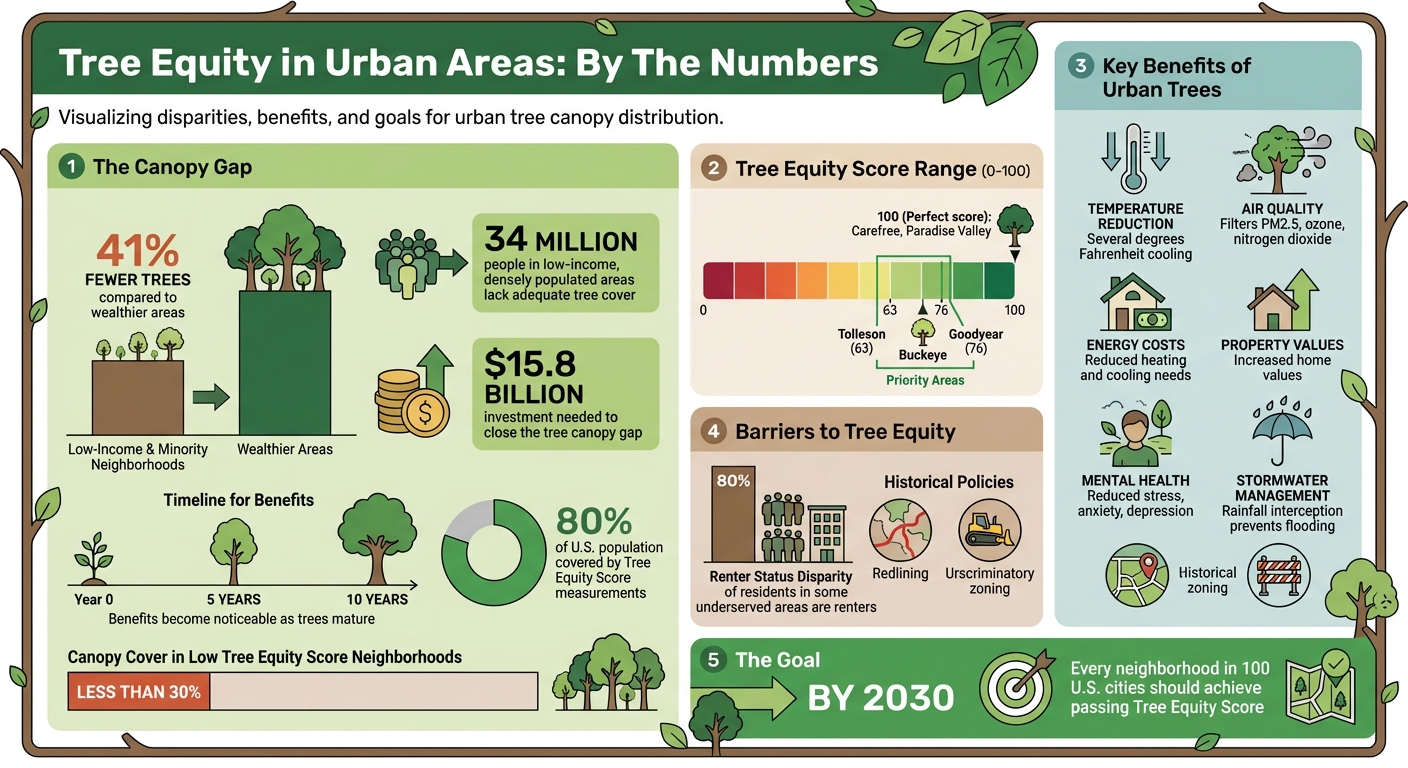
- Tree Canopy Gaps: Low-income and minority neighborhoods in U.S. cities have up to 41% fewer trees than wealthier areas, leading to higher temperatures and health risks.
- Benefits of Trees: Trees reduce heat, improve air quality, lower energy costs, and enhance mental and physical health.
- Barriers: Challenges include limited space, poor soil, underfunded programs, and mistrust of government initiatives.
- Solutions: Tools like the Tree Equity Score identify areas in need, while community-led programs and long-term maintenance funding ensure success.
Addressing tree equity isn't just about planting trees - it's about improving public health, reducing heat risks, and creating stronger, greener communities.
Tree Equity Statistics: Canopy Gaps and Benefits in Urban Areas
Unequal Tree Distribution in Cities
Research on Tree Canopy Gaps
Tree canopy maps in U.S. cities reveal a stark connection between vegetation levels and socioeconomic factors like income and race. Studies across 37 and 10 U.S. cities show that historically redlined, low-income, and minority neighborhoods consistently have less tree coverage. This reflects the long-term effects of historic disinvestment on urban landscapes. Tools like the Tree Equity Score and strategic investments help quantify and address these gaps.
The Tree Equity Score, developed by American Forests, measures disparities in tree coverage at the Census block-group level, covering 80% of the U.S. population . It evaluates existing tree cover alongside factors like income, race, employment, age, population density, and urban heat. Neighborhoods with low scores typically have less than 30% tree canopy, higher heat exposure, and other vulnerabilities . Closing the tree canopy gap for 34 million people in low-income, densely populated areas would require an estimated $15.8 billion investment. The benefits of such efforts would become noticeable as trees grow over the next 5 to 10 years.
How Land Ownership Affects Tree Planting
Land ownership significantly influences tree distribution, adding another layer to the issue. Wealthier neighborhoods often have larger private lots, where homeowners plant and maintain trees, creating dense canopies through individual efforts. On the other hand, low-income areas typically feature smaller lots, more renters, and limited yard space. These conditions force residents to depend on public spaces like streets, parks, schoolyards, and transit corridors for greenery.
This pattern highlights an opportunity for cities to promote equitable urban forestry. Public tree planting initiatives can focus on streets, parks, schools, and public housing, bypassing the complexities of working with private property owners. In these areas, street trees, parking lot plantings, and institutional green spaces are crucial for providing shade and environmental benefits. While engaging private landlords remains important for long-term solutions, targeted public investments can quickly address tree canopy gaps.
Benefits of Urban Trees
Health Benefits
Urban trees play a crucial role in addressing environmental inequality while delivering tangible health advantages, particularly in underserved neighborhoods. By providing shade and facilitating evapotranspiration, trees help cool urban areas by several degrees Fahrenheit, significantly reducing the risks of heat-related illnesses and deaths in vulnerable populations. In areas lacking sufficient tree cover, residents face heightened exposure to dangerous heat during the summer months.
Trees also act as natural air purifiers, filtering harmful pollutants like PM2.5, ozone, and nitrogen dioxide. This improves air quality and lowers the risk of respiratory and cardiovascular issues. Beyond physical health, access to trees and green spaces is linked to improved mental well-being. Studies show that time spent in these environments can reduce stress, anxiety, and depression while enhancing cognitive function and overall quality of life.
Climate and Environmental Benefits
Urban trees are powerful tools for combating the urban heat island effect. By creating cooler microclimates in areas dominated by concrete and asphalt, they help reduce extreme heat. Trees also play a critical role in managing stormwater by intercepting rainfall, which helps prevent flooding during heavy storms.
On a broader scale, trees contribute to climate action by storing carbon in their biomass and soil, helping to offset greenhouse gas emissions. Equitably distributed tree cover brings additional benefits, such as supporting biodiversity and fostering healthier ecosystems in urban areas. These environmental improvements also contribute to economic and social advancements, creating a ripple effect of positive change.
Economic and Social Benefits
Urban trees aren’t just good for the environment - they also bring economic perks. They increase property values and help lower energy costs by providing shade, which reduces the need for air conditioning in the summer and heating in the winter. A national study estimated that bridging the tree-cover gap in low-income neighborhoods would require an investment of about $15.8 billion. This initiative could benefit around 34 million people, with the full ecological rewards becoming evident within 5 to 10 years as the trees mature.
The benefits don’t stop at property and energy savings. Trees improve air quality and reduce local temperatures, which can lower healthcare costs. They also encourage physical activity by creating inviting green spaces, which in turn strengthens community ties. These areas often serve as hubs for recreation and neighborhood events, and research suggests that a well-treed environment can even reduce crime rates and enhance public safety. Together, these advantages highlight how equitable tree distribution can transform urban areas into healthier, more connected, and resilient communities for everyone.
Barriers to Tree Equity
Structural and Social Obstacles
Urban trees bring a host of benefits, but their distribution is far from equal. Historical policies like redlining, urban renewal projects, and highway construction forced Black and low-income communities into crowded neighborhoods with little green space and lots of concrete. These areas now endure higher temperatures and fewer trees - a lingering result of discriminatory zoning that pushed certain groups into overdeveloped or industrial zones.
The physical design of many underserved neighborhoods makes planting trees even harder. Narrow sidewalks, overhead utility lines, sprawling parking lots, and driveways leave little room for large shade trees. On top of that, zoning rules that prioritize cars over walkable, tree-lined streets limit planting opportunities. Even when space is available, poor soil conditions, contamination, and extreme heat from reflective surfaces can make it tough for young trees to survive without consistent care like watering.
Economic and social challenges only add to these difficulties. Chronic underfunding of urban forestry programs often results in delays in planting and maintaining trees. For residents dealing with high energy costs and rent, taking on the responsibility of watering during droughts, pruning, or removing dead trees can feel like an impossible burden. Treating trees as one-time projects rather than long-term investments needing decades of care often leads to early tree deaths, cutting short their potential benefits.
Social dynamics can be just as challenging. In areas where 80% of residents rent, landlords may see trees as liabilities - worried about sidewalk damage, cleanup costs, or insurance risks. Language barriers, mistrust of government, and outreach that doesn’t reflect local communities can also limit participation in tree programs. In some neighborhoods, residents worry that new trees might signal gentrification and lead to displacement, further discouraging involvement.
Lessons from City Programs
Cities are learning from these challenges and shifting their approach. Early tree-planting programs often focused on hitting big numbers, but these efforts revealed major flaws. For instance, million-tree initiatives in hot cities like Mesa and Tucson struggled because saplings planted near reflective surfaces didn’t have long-term irrigation plans, leading to high mortality rates. Trees planted by short-term contractors or volunteers without clear maintenance plans often died, wasting resources.
Now, many cities are adopting smarter strategies. Tools like the Tree Equity Score - which evaluates canopy cover, population density, income, race, age, and heat exposure on a 0–100 scale - help pinpoint areas that need trees the most. In Maricopa County, for example, wealthier areas like Carefree and Paradise Valley score a perfect 100, while more vulnerable communities like Tolleson (63), Buckeye (74), and Goodyear (76) are flagged as priorities.
Programs that collaborate with neighborhood organizations, schools, and faith groups see better results. Using trusted local voices instead of relying solely on city agencies helps boost participation. Some cities are even hiring residents as “tree stewards” or youth crew members, paying them to care for trees while building local knowledge. When communities are involved in choosing tree species, selecting planting sites, and receiving support for watering during critical early years, trees are more likely to thrive. This approach turns trees into valued community assets rather than burdens.
sbb-itb-e116ef9
Strategies for Equitable Tree-Planting
Best Practices for Fair Tree-Planting
To overcome the historical and systemic barriers surrounding urban tree planting, cities can adopt practical, community-focused strategies that ensure fair distribution of green spaces.
Relying on data makes a difference. Tools like the Tree Equity Score help cities identify neighborhoods that lack tree cover and set specific canopy targets for those areas. This ensures that underserved communities receive the attention they need. Collaborating with local organizations to choose tree species and planting sites based on community input is equally important. Providing compensation to residents for their involvement not only fosters trust but also encourages active participation.
Funding for maintenance is non-negotiable. Planting trees is just the first step; ensuring their survival requires consistent care, especially in the first three to five years. Establishing green job programs in underserved neighborhoods can address this need while also creating economic opportunities. According to American Forests, achieving tree equity across the nation will involve planting tens of millions of urban trees - a goal that hinges on long-term funding and workforce development.
By prioritizing these targeted, inclusive strategies, cities can pave the way for meaningful, community-driven tree-planting initiatives.
Community-Led Urban Greening
Creative events can spark local involvement. Tree-planting events that incorporate art, music, and cultural elements can attract higher levels of community engagement. A great example is Carbonated Thoughts, whose Carbonated Racing skateboard line plants a tree for every skateboard sold, directly tying environmental action to consumer choices.
Organizing street festivals, pop-up events, or youth art workshops at planting sites transforms these efforts into vibrant community celebrations. When local artists, skaters, and musicians are involved, tree planting evolves from being a top-down initiative into a shared neighborhood project, embedding trees into the fabric of the community.
These grassroots efforts naturally lead to partnerships that connect tree equity with broader social goals.
Connecting Tree Equity to Social Causes
Collaborations across sectors amplify the impact. Partnerships with organizations in health, housing, and education can frame tree planting as more than an environmental effort. For example, planting trees in underserved areas can be positioned as a public health measure to reduce heat, improve air quality, and support mental well-being.
Tree equity initiatives can also be integrated into existing community programs. Youth organizations, housing advocates, and anti-violence groups can incorporate tree planting and care into their activities, achieving multiple goals at once. American Forests has set an ambitious target: by 2030, every neighborhood in 100 U.S. cities should achieve a passing Tree Equity Score. Reaching this milestone will require consistent collaboration and investment in areas that have been historically overlooked.
Why Tree Equity Matters | FutureBuild 2025 - How Trees Benefit People, Planet, Policy & Profit
Conclusion
The vision for achieving tree equity becomes clearer when we consider the research and strategies outlined earlier.
Tree equity goes beyond simply planting trees - it’s about ensuring every neighborhood reaps the benefits equally. Historically underserved communities often have far fewer trees due to past policies and systemic neglect. This lack of tree cover leads to higher urban temperatures, increased health risks, and fewer opportunities to enjoy the many advantages trees provide.
Tools like the Tree Equity Score help cities identify where investment is most needed. American Forests, for instance, has set an ambitious goal: ensuring neighborhoods in 100 U.S. cities meet equity benchmarks by 2030. As discussed, addressing these disparities requires targeted funding and meaningful community involvement. It’s about prioritizing areas that have been overlooked and actively including local voices in decision-making.
Creative approaches are making a difference. Initiatives that combine tree planting with art, cultural projects, or consumer campaigns - like linking product purchases to tree planting - help weave environmental action into everyday life. These efforts are even more impactful when aligned with broader goals, such as improving public health, creating green jobs, and boosting climate resilience for the communities that need it most.
Achieving tree equity demands a commitment to embedding fairness into urban forestry plans, setting measurable goals, and securing long-term funding for both planting and maintenance. The rewards - cooler neighborhoods, cleaner air, and stronger, more connected communities - are investments that will pay off for generations. By combining data-driven strategies with community-driven action, we can create a more sustainable and equitable urban future.
FAQs
What is a Tree Equity Score and why is it important?
The Tree Equity Score is a tool designed to assess how trees are distributed across a community. It takes into account factors like canopy coverage, population density, income levels, and public health data. Often, it reveals that areas with fewer trees tend to be underserved neighborhoods.
This score serves as a roadmap for directing tree-planting initiatives to the areas that need them the most. By increasing tree coverage in these locations, communities can enjoy cleaner air, cooler urban temperatures, and a boost in both environmental and social well-being. This approach not only addresses inequities but also helps build healthier, more resilient urban environments.
Why are urban trees essential for healthier and more climate-resilient cities?
Urban trees are essential for public health, acting as natural air filters by reducing pollution and cooling down overheated cityscapes. They create inviting spaces for people to exercise, relax, and recharge, which can have a noticeable impact on both physical and mental well-being. Green spaces provided by trees are known to ease stress and contribute to an improved quality of life.
Beyond health, trees play a key role in addressing climate challenges. They absorb carbon dioxide, help manage stormwater by minimizing runoff, and reduce the urban heat island effect - a phenomenon where cities become significantly warmer than surrounding rural areas. These benefits not only make cities more livable but also better prepared to face the growing impacts of climate change.
What challenges prevent cities from achieving tree equity?
Achieving fair distribution of trees in urban areas comes with its fair share of challenges. One major hurdle is socioeconomic inequality - lower-income neighborhoods tend to have fewer trees compared to more affluent areas. This imbalance limits access to the many advantages that green spaces provide, from cleaner air to cooler temperatures.
Another significant issue is insufficient funding. Urban forestry programs often struggle to secure the resources needed to plant and maintain trees in areas that need them most. On top of that, land availability can be a problem. Some neighborhoods simply don’t have enough public or private space suitable for planting trees. Lastly, a lack of political will or policies that prioritize tree equity can slow progress even further.
Overcoming these obstacles requires teamwork. Communities, local governments, and organizations must join forces to ensure everyone can benefit from the environmental, social, and health perks that come with a greener urban landscape.