

Carbon-Neutral Supply Chains for Skateboard Brands
Skateboard brands are cutting emissions by rethinking their supply chains. Here's how they're doing it:
- Materials: Switching to FSC-certified maple and recycled carbon fiber reduces emissions during production. These materials are sourced responsibly and last longer.
- Manufacturing: Factories are adopting renewable energy, energy-efficient equipment, and non-toxic finishes like water-based or UV-cured inks.
- Logistics: Brands are choosing local suppliers, low-emission freight methods (like rail or ocean shipping), and electric vehicles for last-mile delivery.
- Offsets: Unavoidable emissions are balanced by funding projects like reforestation, methane capture, and renewable energy.
Consumers are demanding eco-conscious products, and brands like Elevated Materials and Caprock Skateboards are leading the way. By reducing waste, saving energy, and offering transparent processes, skateboard companies are aligning with these values while preparing for future regulations and lowering costs.
Choosing Materials with Lower Carbon Emissions
Low-Impact Deck Materials
The skateboard industry’s reliance on specific forest regions significantly contributes to emissions through logging, energy-intensive drying and pressing processes, and long-distance shipping. By opting for materials with a smaller environmental impact, brands can reduce their carbon footprint right from the start.
One option is FSC-certified Canadian maple, which remains a practical and widely used material. For example, THE SKATEROOM uses FSC-certified wood combined with UV-cured biodegradable inks, ensuring responsible forest management practices. The FSC certification guarantees a documented chain-of-custody from the forest to the finished product, offering traceability that unregulated imports lack. However, with nearly all decks relying on 7-ply Canadian maple, the strain on these forest regions is immense.
A more unconventional alternative is recycled carbon fiber sourced from aerospace manufacturing waste. The aerospace industry discards 20–40% of its carbon fiber material - including trim, off-cuts, and expired stock - even though it remains structurally sound. Producing carbon fiber decks uses significantly less energy than wooden decks and generates less waste, helping to lower overall emissions. These decks are also highly durable, reducing the need for frequent replacements and spreading their embedded emissions over a longer lifespan. Companies like Elevated Materials have embraced this approach, collecting aerospace scrap daily, freezing unused material to preserve it, and tracking its use to prevent it from ending up in landfills.
Though examples of recycled ocean plastics in decks are rare, brands like OMW Boards have integrated recycled materials into electric skateboard components, such as natural rubber tires. The greater potential lies in using recycled plastics for non-deck parts, such as truck housings, risers, bushings, bearing spacers, and packaging. This shift would reduce reliance on virgin plastics and the emissions tied to petrochemical production. Sustainable choices extend beyond the materials themselves to include the logistics of their transportation.
Local Sourcing to Cut Transport Emissions
Where materials are sourced plays a huge role in emissions. Transoceanic shipping alone can emit 50–100g of CO₂ per ton-mile, making long-haul transport a significant contributor to a deck’s carbon footprint. By sourcing materials like wood, glues, and inks from suppliers located within 500 miles of the pressing facility or primary customer base, brands can slash transport emissions by 70–90% compared to international sourcing.
For U.S. skateboard companies, partnering with domestic or North American mills and veneer suppliers shortens supply chains and improves transparency. THE SKATEROOM, for instance, sources Canadian maple for its European production facilities, keeping materials and manufacturing in the same region to limit freight emissions. Geo-audits and supplier certifications can help brands identify regional suppliers that meet both quality and cost expectations while reducing transport-related emissions.
Manufacturing Methods That Reduce Emissions
Energy-Efficient Production Methods
In manufacturing, emissions often stem from energy-intensive equipment like heating presses, compressors, and dust extraction systems, which frequently rely on grid electricity partially derived from fossil fuels. U.S. brands can reduce their carbon footprint by transitioning factory power to renewable energy sources. This can be achieved through on-site solar panel installations or by purchasing renewable energy credits. Even small-scale rooftop solar systems can offset a substantial portion of daytime energy consumption.
Upgrading machinery is another impactful step. For instance, high-efficiency hydraulic presses equipped with insulated platens and programmable temperature controls can slash energy usage by double-digit percentages compared to older models. Similarly, variable-speed drives on compressors and dust extraction fans adjust power to match demand, further cutting energy use. For companies working with contract manufacturers, incorporating renewable-energy commitments into supplier agreements and prioritizing factories that use certified green electricity can significantly lower emissions.
Precision engineering also plays a crucial role in reducing waste and embedded carbon. A great example is Ryan Olliges of Elevated Materials, who in 2019 started producing carbon fiber skateboards using a self-built 121°C (250°F) press that reclaims 20–40% of aerospace scrap carbon fiber resin. This method evolved into manufacturing stock sheets from sorted scrap, diverting waste from landfills while creating high-quality carbon fiber components. Advanced techniques like CNC routing or waterjet cutting, guided by CAD-based templates, further optimize material use and reduce scrap. Additionally, leftover materials can be repurposed into smaller products or composite sheets, ensuring minimal waste.
Closed-loop systems also contribute to sustainability by metering chemical use and recovering solvents, allowing them to be reused rather than discarded. Filtration systems capture resin dust, directing it into controlled waste streams. These practices naturally align with eco-conscious finishing processes, further enhancing energy efficiency.
Non-Toxic Inks and Coatings
Traditional solvent-based inks and coatings release VOCs during printing and drying, which contribute to smog formation and pose health risks. To address this, many brands are transitioning to water-based inks. These inks replace a substantial portion of organic solvents with water, significantly lowering VOC emissions. Another alternative is UV-curable inks, which cure almost instantly under UV light, emit minimal VOCs, and can be formulated with biodegradable components. Some skateboard brands now use UV biodegradable inks, eliminating harmful chemicals while maintaining performance.
Clear coatings are also evolving. Zero-VOC or ultra-low-VOC clear coats rely on waterborne or high-solids formulations instead of solvent-heavy blends. Modern water-based and UV coating systems deliver vibrant colors and strong adhesion but may require adjustments in production, such as changes to mesh counts, squeegee pressures, or curing conditions. Water-based inks often need longer drying times or controlled environments with proper airflow, temperature, and humidity. On the other hand, UV systems require specialized UV lamps and safety protocols. Despite these adjustments, low-VOC and UV coatings often match - or even surpass - the abrasion and chip resistance of traditional coatings, making them a practical choice for sustainable skateboard production.
Traditional vs. Low-Carbon Deck Comparison
When comparing traditional and low-carbon deck manufacturing, the differences become clear. The table below highlights these distinctions:
| Material Type | Emissions Profile | Waste Generation | End-of-Life Options | Durability Characteristics |
|---|---|---|---|---|
| 7-ply Canadian maple | High – energy-intensive processing (e.g., logging, drying) | Approximately 20–40% loss | Limited recycling; often landfilled | Prone to delamination and chipping |
| Recycled carbon fiber composite | Low – upcycled aerospace scrap avoids intensive processing | Minimal waste with precision cutting | Partially recyclable composite sheets | Superior impact resistance and durability |
Recycled carbon fiber decks stand out for their lower energy requirements during production. By repurposing aerospace scrap, they bypass the energy-intensive processes associated with harvesting and processing new wood. Additionally, these decks are more durable, withstanding impacts better and lasting longer. This extended lifespan effectively spreads their embedded emissions over a longer period. Precision manufacturing techniques, such as composite lay-up and CNC or waterjet cutting, also generate far less waste compared to traditional wood shaping. This combination of durability and efficiency makes recycled carbon fiber decks a compelling choice for reducing emissions in skateboard production.
Resin Infused Skateboard Using Carbon Fibre, Flax and Bio Resin
Reducing Transportation and Logistics Emissions
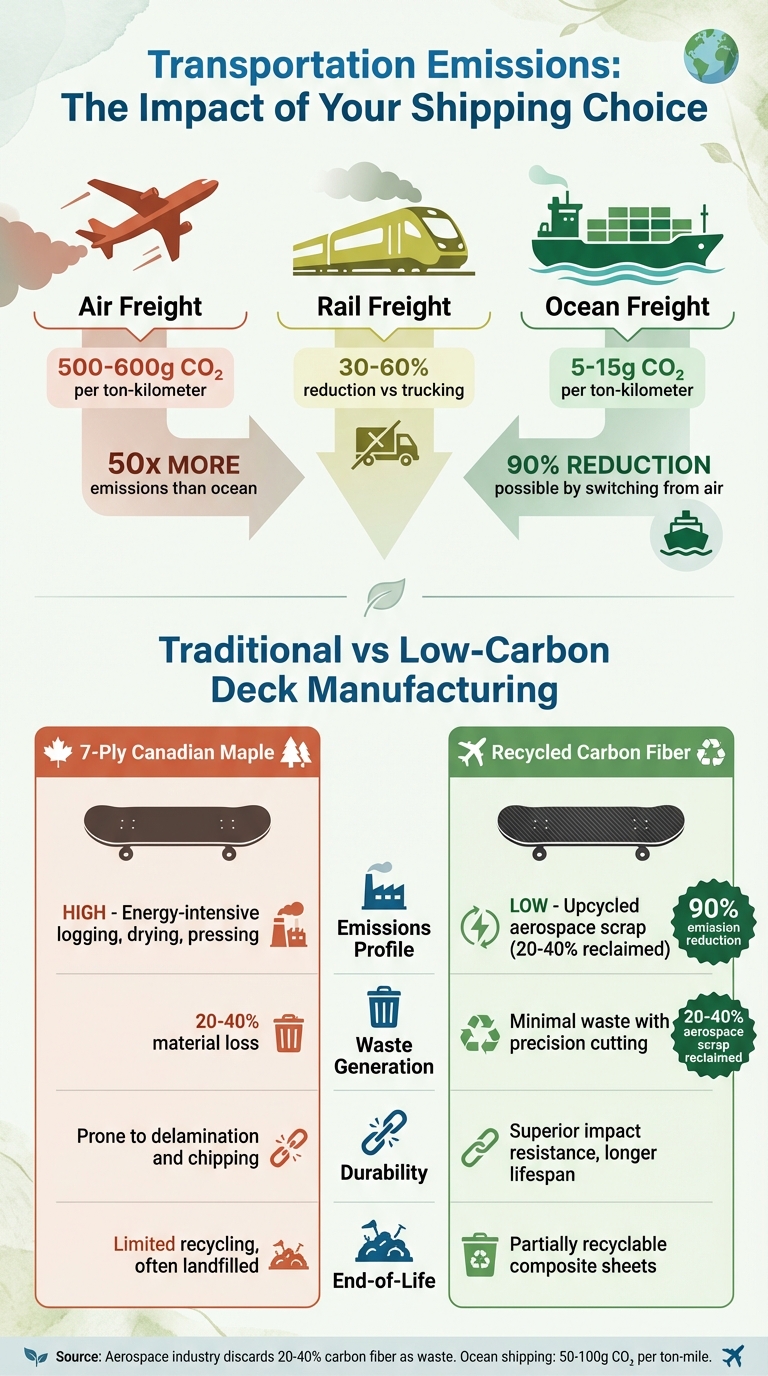
Carbon Emissions Comparison: Air vs Ocean Freight and Traditional vs Low-Carbon Skateboard Decks
Once you've optimized material sourcing and embraced energy-conscious manufacturing, the next logical step is tackling emissions from transportation.
Choosing Lower-Emission Freight Methods
The type of transportation you use has a huge impact on your carbon footprint. For instance, air freight emits around 500–600 grams of CO₂ per ton-kilometer, while container ships produce a mere 5–15 grams. That means air freight can generate roughly 50 times more emissions than ocean shipping for the same cargo. By switching from air to ocean freight, skateboard brands importing decks, trucks, and wheels from overseas could slash transport emissions by over 90% per kilogram shipped. This shift isn’t just eco-friendly - it supports broader supply chain decarbonization goals.
For inland shipping from U.S. ports, rail freight offers another low-emission alternative. Moving containers by rail and consolidating orders into full loads can reduce emissions by 30–60% per unit. However, longer lead times (typically 2–5 weeks) mean you'll need to plan for larger, consolidated shipments to maximize these savings.
Electric and Biofuel Vehicles for Final Delivery
Final-mile delivery is another area where emissions can be cut significantly. While most skateboard brands don’t own delivery fleets, partnering with carriers that provide low-carbon last-mile options can make a big difference. Electric parcel vans, for example, can reduce tailpipe CO₂ emissions by 80–100% compared to diesel vehicles, especially when charged using low-carbon energy grids. Similarly, trucks powered by biofuels like renewable diesel can achieve 50–80% lifecycle CO₂ reductions without requiring new vehicles.
Practical actions include working with fulfillment centers and third-party logistics providers that prioritize electric or alternative-fuel vehicles. Negotiating "green service levels" for urban deliveries can also help lower emissions. Smaller brands might consider shared fulfillment centers or platforms that pool shipments to access low-carbon delivery options. For local deliveries - like to skate shops or events - bike couriers or cargo bikes can eliminate vehicle emissions entirely.
Route Planning Tools to Lower Emissions
Efficient route planning is another way to cut emissions. Using software that reduces backtracking, avoids traffic congestion, and groups deliveries geographically can lower fleet miles by 10–30%. Brands should collaborate with logistics partners to implement multi-stop route planning tools that factor in vehicle capacity, service times, and real-time traffic data. Improvements can be verified by comparing mileage before and after implementing these tools.
To monitor emissions, start with shipment-level carbon calculators offered by carriers. These tools can help pinpoint high-emission routes and set clear goals, such as reducing air freight ton-miles by 80% within a year. Sharing these targets and progress updates with eco-conscious customers builds trust. Offering an "eco-delivery" option at checkout - using consolidated ground shipping with defined delivery windows - encourages greener choices, while still allowing customers to pay extra for faster shipping if needed.
sbb-itb-e116ef9
Offsetting Unavoidable Carbon Emissions
Even with streamlined operations, some emissions are inevitable, especially from upstream processes and third-party activities. For instance, suppliers who haven't yet adopted renewable energy can contribute to these residual emissions. This is where carbon offsets come into play - they help balance out these emissions by funding projects that either remove greenhouse gases or prevent their release elsewhere.
Selecting Verified Offset Projects
When choosing offset projects, it's essential to prioritize verified credits certified by organizations like Gold Standard, VCS, or Climate Action Reserve. These certifications ensure that the projects meet standards for additionality, permanence, and independent audits.
Here are four types of offset projects that align well with skateboard brands:
| Project Type | Impact Certainty | Key Co-Benefits | Common Standards |
|---|---|---|---|
| Reforestation | Medium (growth + fire risk) | Biodiversity, soil restoration, jobs | Gold Standard, VCS |
| Forest Conservation | Medium (baseline risk) | Wildlife protection, indigenous rights | VCS, Climate Action Reserve |
| Methane Capture | High (measurable reductions) | Improved air quality, sometimes energy access | VCS, Climate Action Reserve, ACR |
| Renewable Energy | High (metered generation) | Cleaner air, energy access | Gold Standard, VCS |
For example, Caprock Skateboards joined Climeco's EcoCommitted™ Partner Program to offset their annual operational emissions. They funded projects such as forest conservation, methane removal, and greenhouse gas abatement, reinforcing their dedication to responsible materials and transparent supply chains. For smaller brands emitting around 500 tons of CO₂e annually, offset costs might range from $2,500 to $8,000 per year. This translates to just a few cents or dollars per skateboard deck and can be factored into pricing. Combining project types, like forest conservation and methane capture, offers a smart mix of long-term carbon storage and immediate emission reductions.
Once you've selected the right projects, it’s critical to track your progress and share your results openly.
Tracking and Reporting Emissions
Maintaining credibility requires a solid tracking and reporting system. Start by calculating your Scope 1, 2, and key Scope 3 emissions using tools or consultants aligned with the Greenhouse Gas Protocol. Gather annual data on aspects like electricity use, fuel consumption, freight distances, raw material quantities, and shipped parcels. Use emission factors from the EPA or IPCC to convert this data into tons of CO₂e. Additionally, ask suppliers, factories, and logistics partners for their emissions data - they often track this for their own ESG reports.
After retiring verified credits in a public registry, make your methodology and annual emissions data publicly available. This transparency, combined with third-party verification, ensures your claims are backed by reliable data. To stay accountable, update your targets every one to three years and share progress updates with environmentally conscious customers. This not only builds trust but also strengthens engagement with your brand’s sustainability efforts.
Working with Platforms on Carbon-Neutral Programs
Once you've optimized materials and manufacturing processes, teaming up with platform-based carbon-neutral programs can take your supply chain to the next level. These platforms make it easier to create a carbon-neutral supply chain by offering consulting services, eco-friendly programs, and customer-focused initiatives - all without requiring your team to be experts in sustainability.
Consulting Services for Sustainable Design
Platforms that blend creative expertise with a focus on sustainability can help you assess your supply chain, develop low-impact product prototypes, and align your environmental goals with your brand identity. For instance, they can guide you in switching to materials like FSC-certified maple, recycled carbon fiber, or non-toxic UV-cured inks. They can also pinpoint areas where emissions are highest, such as material sourcing, energy consumption during production, or packaging.
Take Carbonated Thoughts as an example. They offer a range of services, including design and business consulting, with rates starting at $30 per hour for consulting and $55 per hour for graphic design (with a three-hour minimum). They help brands create sustainable prototypes and incorporate eco-friendly materials into their designs. Beyond reducing carbon footprints, this kind of support also strengthens a brand's environmental story and message. And it doesn’t stop there - customer-focused programs can further showcase your commitment to sustainability.
Environmental Programs That Engage Customers
Initiatives like planting a tree for every skateboard sold are great ways to build customer loyalty while addressing emissions. These programs are most effective when they’re transparent, tied to verified projects, and easy for customers to understand.
For example, Carbonated Thoughts runs the Carbonated Racing initiative, where they plant a tree for every skateboard deck sold. Programs like this allow customers to contribute to climate action with each purchase. They're also simple to communicate - whether at checkout or through order confirmations. Adding a "carbon-neutral operations" badge to your website and linking it to a page that explains your process and partners can build trust. This approach meets the growing expectations of U.S. consumers, who increasingly value "responsible materials, transparent supply chains, and a clear commitment to reducing environmental impact".
Conclusion
Sustainable sourcing, efficient production, and smarter logistics aren't just buzzwords - they're the building blocks of a carbon-neutral supply chain. And the benefits? They go beyond helping the planet; they set your brand apart. By choosing low-impact materials like recycled carbon fiber or FSC-certified maple, using energy-efficient manufacturing methods with non-toxic, UV-biodegradable inks, streamlining logistics with smarter route planning and cleaner vehicles, and supporting verified offset programs, brands can shrink their environmental footprint while building stronger customer loyalty.
The skateboarding industry is uniquely positioned to lead the way in carbon neutrality. With relatively small product sizes and a growing focus on sustainability, brands like Elevated Materials and THE SKATEROOM are already proving that it's possible to balance environmental responsibility with business success.
And let’s not forget the financial perks. Recycled materials often cost less than virgin ones, energy-efficient production cuts utility expenses, and durable products mean fewer replacements. Plus, transparency about these efforts resonates deeply with eco-conscious customers, creating trust and loyalty.
To start, identify your biggest emission contributors - materials, production, and transportation - and focus on those areas. Partnering with organizations like Carbonated Thoughts, which offers design and business consulting for sustainability, can help you make these changes without requiring in-house expertise. Adding initiatives like planting a tree for every order or supporting verified carbon offsets can further engage your customers in your mission.
The journey to carbon neutrality is about balancing immediate action with long-term strategies. It’s a win for the environment and your business. No matter the size of your skateboard brand, meaningful steps are within reach today.
FAQs
How do recycled carbon fiber skateboard decks compare to traditional maple decks in durability and environmental impact?
Recycled carbon fiber skateboard decks often outlast traditional maple decks, thanks to their superior resistance to wear and tear. This durability makes them a dependable option for skaters seeking a board that can handle heavy use over time.
When it comes to environmental impact, these decks stand out with a much smaller carbon footprint during production compared to their maple counterparts. By reusing materials, they cut down on waste and emissions, offering an eco-friendly alternative for skateboarders who prioritize sustainability.
How can skateboard brands make their supply chains more environmentally friendly?
Skateboard brands have a real opportunity to make their supply chains greener by focusing on environmentally conscious practices at every step. One way to start is by choosing materials that are kinder to the planet, like FSC-certified wood or recycled components, which can help lower the environmental toll of production. Collaborating with suppliers who use renewable energy and uphold ethical labor standards can also contribute to a more responsible supply chain.
On top of that, improving transportation logistics - like combining shipments or switching to fuel-efficient vehicles - can significantly cut down on emissions. Creating skateboards that are built to last not only reduces waste but also encourages sustainability. For emissions that can’t be avoided, carbon offset programs are a practical way to balance the scales. These thoughtful adjustments throughout the supply chain can add up to a meaningful reduction in the overall carbon footprint.
How can I find and support skateboard brands that are committed to carbon-neutral practices?
To support skateboard brands that prioritize carbon-neutral practices, keep an eye out for companies that focus on using sustainable materials, maintaining transparent supply chains, and implementing eco-conscious initiatives like offsetting emissions through renewable energy or tree-planting projects. Many of these brands proudly showcase their efforts through certifications or public pledges to environmental responsibility.
Whenever you can, opt for brands that actively engage in social and environmental causes. By backing these companies, you're not just buying a skateboard - you’re encouraging greener practices and helping push the skateboarding industry toward a more sustainable future.