
Storytelling Through Animated Skateboard Art
Animated skateboard art works when motion serves the story - not when it just adds movement. If I had to boil the whole piece down, it comes to 4 things: a clear idea, tight pacing, repeated visual cues, and a style that fits the mood.
Here’s the short version:
- Static deck art shows one moment. Animation shows change over time.
- Timing matters. Pauses, short bursts, and clean scene shifts help viewers follow the story.
- Color and symbols guide meaning. The article points to 2–3 core motifs as a good limit for keeping the piece easy to read.
-
Style changes the feel.
- 2D fits bold graphic stories
- 3D fits space-driven or surreal scenes
- Stop-motion/claymation fits rough, handmade, character-led work
- Workflow matters. Start with one clear message, map a simple setup → turn → payoff arc, test pacing with an animatic, then build the final sequence.
- Skate roots matter. The piece should still reflect skate history through pacing, references, and board-shape cues like 1980s old school forms, small noses, and grab cutouts.
One line in the article says it well: motion can shift a deck graphic from a fixed mood into a story about growth, tension, or change. That’s the main point.
If you’re making this kind of work, I’d keep it simple: lead with the strongest image, stick to 2–3 ideas, and make every movement do a job.
| Part | What it does |
|---|---|
| Motion | Turns one image into a sequence |
| Timing | Sets rhythm and payoff |
| Color/symbols | Marks mood shifts and story beats |
| Animation style | Changes tone and texture |
| Storyboard/animatic | Tests flow before full production |
| Skate references | Keeps the piece tied to skate history |
In short: I see this article as a guide to making deck art feel like a short visual story, not just a moving graphic.
Skateboard Stop-Motion Animation
sbb-itb-e116ef9
How motion builds a narrative in skateboard art
In skateboard art, motion turns deck graphics into a sequence of attitude, movement, and change. The order of the frames, the speed of each beat, and what changes from one moment to the next all shape how people read the art.
Timing, sequencing, and transitions
Pacing matters. Short bursts, brief pauses, and clean transitions help each moment land without overloading the viewer. A clear sequence should move from setup to payoff, with each frame pushing the next one forward.
Wipes, fades, and zooms help move between visual ideas while keeping the story connected. A zoom can also pull the viewer's eye to the most important detail.
Those timing choices affect how the visual style carries the story.
Color, symbols, and repeated visual motifs
Color shifts can signal mood changes and mark turns in the story. In animated skateboard art, a new palette can show a change in tone or hint that the narrative is moving into a new phase.
Repeated motifs add rhythm and make the story easier to track. When a logo, character, or symbol comes back across frames, it gives the deck graphic a visual thread. Stick with 2–3 core motifs to keep the story clear. Revealing symbols in stages can build suspense and hold attention on key moments.
Once the story beats are in place, the animation style can sharpen how those beats feel.
How motion changes the meaning of the deck art
Motion can turn a single graphic into a story about growth, tension, or change. A static graphic gives you one fixed mood. Animation, on the other hand, can move through different moods by shifting palettes, lighting, or scene settings.
"Animation does more than entertain; it compresses landscapes, histories, and cultural memory into movement and frame." - Maya Ellison, Senior Editor & Scenic Travel Curator
That change over time is what makes the story feel alive. And that's what leads into the choice of animation style in the next section.
Animation styles that work for skateboard storytelling
Pick the style that matches the story. Each animation approach shifts the tone, pace, and visual weight of the piece. From there, the team can turn that choice into a storyboard and then into a finished sequence.
2D animation for bold graphic stories
2D animation feels like a natural match for skateboard art. Bold lines, flat fills, and high-contrast graphics line up with graffiti lettering and hand-drawn deck art. Subtle zooms, pans, and transitions, timed to the beat, help keep the motion smooth.
That makes 2D a strong fit when the story needs fast, graphic clarity.
3D, stop-motion, and claymation for texture and depth
3D animation opens up spatial movement and surreal settings, which makes it a good pick when the story needs to feel immersive or otherworldly. Stop-motion and claymation add a handmade, tactile feel that connects well with skateboarding's DIY roots and works well for experimental, gritty, or character-led stories.
Use 2D for bold graphic stories, 3D for immersive or surreal scenes, and stop-motion or claymation for tactile, character-led work. Each medium changes how the viewer reads motion, texture, and mood.
A simple workflow for producing animated skateboard art
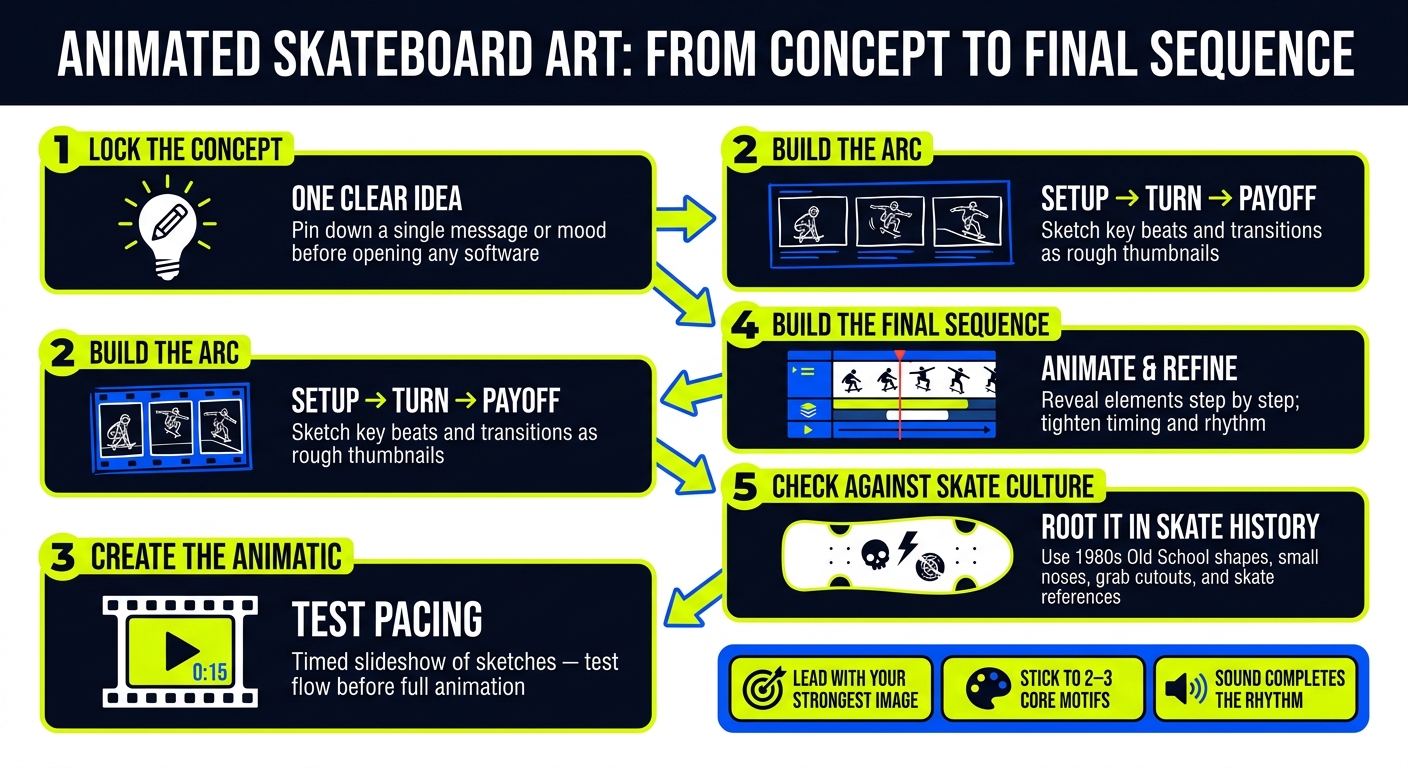
Animated Skateboard Art Workflow: From Concept to Final Sequence
From concept sketch to storyboard and animatic
Once the style is locked, shift from ideas to timing.
Start with one clear idea. Before you open any software, pin down a single message or mood for the piece. That one anchor keeps the animation on track and stops the story from drifting.
Then build a simple arc: setup, turn, payoff. Sketch the key beats and transitions in a loose way. Rough thumbnails are enough at this stage. You’re not trying to finish every visual. You’re trying to lock the flow of scenes. If the main idea is weak, every frame tends to feel weak too.
When the storyboard starts to click, make a quick animatic - a timed slideshow of those sketches. It’s an easy way to test pacing before the actual animation work starts.
Building the final sequence
Once the animatic is approved, move into animation using the storyboard as your guide. Let motion reveal graphic elements step by step, support the sequence, and keep the story easy to follow. Then tighten the timing and rhythm so the movement feels intentional.
Put the strongest image up front, and keep the piece focused on 2–3 core ideas. Sound matters too. Music or subtle sound effects can make the motion feel complete, and sound or subtle effects can finish the rhythm.
Keeping the visual style true to skate culture
After timing is set, check each visual choice against skate culture.
Keep the pacing patient, and keep the references tied to skate history. Use pauses and repetition to build rhythm. To ground the piece in skate culture, use visual cues from skate history such as 1980s-inspired Old School shapes, small noses, and grab cutouts.
Conclusion: What makes animated skateboard art work
Animated skateboard art works when motion does more than move. It needs to carry the story, the mood, and the momentum already built into the deck. That matters more than any animation technique.
If the story is weak, the animation won't save it. Fancy motion can't fix a thin idea. Once the core idea is there, consistency is what makes the piece easy to follow.
Consistency in pacing, motifs, and style keeps the story readable. It helps the viewer stay with the piece instead of getting lost in it.
The work also needs to stay rooted in skate culture. That shows up in the pacing, the references, and the values behind the piece.
When that base is in place, motion can turn a deck graphic into a clear story.
FAQs
How long should an animated deck story be?
There’s no single required length. What matters most is the heart of the story and how smoothly it moves from one moment to the next. A strong story arc matters more than polished visuals.
Before you animate anything, sketch a rough storyboard to map the key beats and transitions. Keep the story tight and intentional so the message stays clear and hits the way you want it to.
What makes a skateboard animation feel too busy?
A skateboard animation can feel too busy when it packs in tiny details. Those details often get lost, warped, or beaten up once the board goes through actual skate wear.
Just like static hand-lettered art, simplicity keeps the design clear and strong. Carbonated Thoughts points out that bold, balanced designs tend to work better across a deck’s curves and in a high-impact setting.
How do I keep animated deck art true to skate culture?
Focus on community and staying true to skate culture. It’s built on personal style, self-expression, and deep ties to punk, hip-hop, and surf roots.
Show skateboarding as it actually feels. A clean trick after a dozen failed tries. The small hype from friends on the sidelines. The kind of session where everyone feeds off each other’s energy. That lands much better than generic “edgy” visuals that could belong to any brand.
Storytelling matters here. Shared moments, local scenes, and causes people care about give the work more weight. That’s part of why efforts tied to groups like Carbonated Thoughts connect with skaters - they reflect values people can see and feel, not just a look.